Overview
Dealing with a cluttered database full of bot-driven leads is more than just a nuisance; it’s a drain on your resources and a threat to your CRM integrity. When bots crawl your site and flood your Pardot forms, they trigger automation rules and waste your sales team's time on fake prospects.
This guide breaks down 5 proven ways to thwart spam in 2026, including:
- Leveraging the built-in Honeypot technique to catch bots invisibly.
- Implementing CAPTCHA for forms to block advanced attacks.
- Using server-side submissions to hide your Pardot form handler from scrapers.
- Refreshing compromised handlers and utilizing smart email field restrictions.
- Standardizing data to improve lead quality.
Learn how to stop spam form submissions and build a secure, robust marketing automation setup today.
Learn How To Prevent Bots From Submitting Forms To Pardot Systems
Spam form submissions are form submissions that contain unwanted, irrelevant or harmful information. These could be filled in by human users who attempt to flood forms with undesired results or the result of a bot crawling known websites and automatically submitting your form.
Online forms are easy targets for bots and can fill your database with spam prospects. Imagine a marketing resource spending time filtering out spam submissions from contact forms. It’s a sheer waste of time, effort and resource cost.
Spam form submissions are one of the most common challenges faced by Pardot admins and can significantly impact your marketing automation system. With the right Pardot implementation and configuration, businesses can reduce spam entries and improve lead quality. A spam form once submitted and categorised as a prospect can become a part of your automation and assignment rules. It might enter into your CRM as well.
5 proven ways to thwart spam form submission in Pardot:
Below are some additional strategies that can be used to reduce spam from the Pardot form handler submissions.
1. Pardot Form Protection From Bot - Inbuilt Honeypot Technique
All forms hosted by Pardot have built-in bot protection by using a negative CAPTCHA called a honeypot. Add a Honeypot field to external form. It’s an invisible field that your prospects can’t see. However, bots do see this field and fill it out. Pardot rejects all the form submissions when the honeypot field has a value.
Unfortunately, as spam prevention improves, so does spam. The most sophisticated bots may be able to figure out a honeypot and bypass it.
2. Using CAPTCHA Or ReCAPTCHA
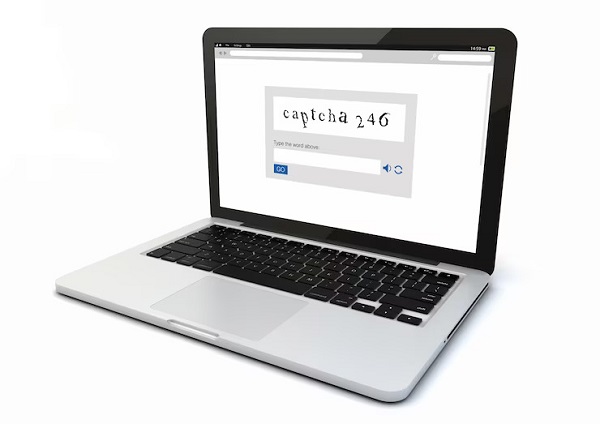
On a Pardot form – there is a setting that would enable the reCAPTCHA box to the form for advanced bot protection. For third party forms that are submitted to Pardot form handlers, CAPTCHA or reCAPTCHA security can be added to the third-party form. Most form services offer CAPTCHA or reCAPTCHA on their forms or methods to add the code for that. The best way to find this information is by doing a web search or contacting the third-party form's support team.
3. Using A Server-Side Submission
Spam submissions often come from bots that scrape the form handler's endpoint URL from the web page where the third-party form is located. To combat that type of submission, the third-party form can be set up to submit to an external server and then have the server submit to Pardot. This would prevent bots from finding the form handler's endpoint URL on the web page. This setup is out of scope for Pardot support and will require working with a web developer or the third-party form's support team.
4. Making A New Pardot Form Handler
If the form handler is compromised and gets lots of spam submissions, the form handler can be deleted in Pardot. This will invalidate the form handler URL and a new form handler can be created in its place.
Adding Restrictions To The Email Field On Forms
Pardot form and form handlers have 3 options for email addresses:
-
Option 1 - “Email,” which just requires valid email address syntax
-
Option 2 - “Email with valid mail server” requires valid email address syntax, a live domain name and a receiving email server listed in DNS records
-
Option 3 - “Email not from ISPs and free email providers” which requires everything for “Email with valid mail server” plus the address cannot be from a known free ISP (e.g., Comcast, Charter) and cannot be from a free email provider (e.g., Hotmail, Gmail, Yahoo! Mail)
It makes sense to choose option 2 while configuring the email field as option 1 is too relaxed as it will accept anything that remotely resembles an email and option 3 is too restrictive.
5. Standardise State And Country Values
Any form fields that you can make into picklists of predefined values is going to improve the quality of incoming data, so use dropdowns wherever possible. Even if the State and Country fields are Text fields, you can still make these field dropdowns on forms. To configure this, just select the type “Dropdown”, then go to the values tab and select the type of data you’d like to display.
Besides all the protection, there will be still submissions that would bypass all protection and make their way through.
The Wrap
If you want to know how to manage the SPAM leads that have already entered the system and prevent them from entering CRM. TransFunnel is just a click away from you!
The broad approach here is to identify spam commonalities and create a spam list. Now set the automation rule to match the incoming form entries with the spam list and define the desired actions like “Do no sync with the CRM” or “decay their score to 0”.
Implementing these strategies helps minimise spam submissions and contributes to building a secure and efficient Pardot marketing automation system.
Improve lead quality by stopping spam in your Pardot forms. Connect Now
Frequently Asked Questions
-
Can I block specific types of email addresses to reduce spam?
Yes! A professional best practice is setting your email field to "valid mail server." This ensures the domain actually exists and prevents the most basic form spam submissions from cluttering your database with fake "abc@123.com" style addresses.
-
What's the difference between a Pardot form and a Pardot form handler for spam?
Pardot forms include a "honeypot" feature to catch bots. With a Pardot form handler, you need to configure bot protection on your own site. You need to configure bot protection on your own site with a Pardot form handler.
-
What are some best practices for managing and optimizing Pardot forms?
Optimize your Pardot forms for security by using dropdowns to standardize data. You can also optimize your Pardot forms by A/B testing your layout. If a Pardot form handler is compromised, delete it and create a new one to invalidate the old, targeted URL.
-
When should I use CAPTCHA for forms in Pardot?
You should use the CAPTCHA for the forms when you are seeing sophisticated spam bots getting through your 'Honeypot' method. When, in 2026, you are seeing sophisticated spam bots getting through your 'Honeypot' method, then you should use the CAPTCHA for the forms.
-
How does the 'Honeypot' method prevent the spams from entering the forms?
The 'Honeypot' method captures the bots. This is because the bots are not able to see this field. When there is content in this field, Pardot denies the bot’s form submission. Therefore, the bots, i.e., the spams, are not allowed to go through. The process happens smoothly for the users.